








Rugged Phone: The Complete Buying Guide for Construction, Field Service & Industrial Work
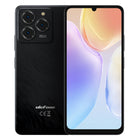
TL;DR: A rugged phone is a smartphone independently tested to survive drops, dust, water, and extreme temperatures — conditions that take standard phones out of commission on a job site. The two certifications that actually matter are IP68/IP69K (water and dust protection) and MIL-STD-810H (military-grade shock and environmental testing). Below, we cover what to look for, how to match a model to your specific work environment, and how Ulefone's Armor lineup compares.
If you've ever cracked a phone screen on a job site, lost a device to a sudden downpour, or watched a battery die halfway through a double shift, you already understand the problem a rugged phone is built to solve. Standard consumer smartphones are engineered for offices and living rooms — not concrete floors, dust-heavy warehouses, cold storage facilities, or a toolbelt that takes a beating all day.
This guide breaks down what actually makes a phone "rugged" (beyond the marketing language), which certifications are worth checking, and how to pick the right model for construction, field service, logistics, or industrial work.
What Is a Rugged Phone?
A rugged phone is a smartphone built and independently tested to withstand physical and environmental stress well beyond what a standard consumer device can handle. That means:
- Surviving drops onto concrete, scaffolding, or equipment — not just carpet
- Resisting dust and debris in construction, mining, or warehouse environments
- Handling water exposure from rain, washdowns, or accidental submersion
- Operating in temperature extremes — direct sun on a rooftop, or a sub-zero cold storage facility
- Lasting a full shift (or several) without needing a mid-day recharge
The key distinction from a regular phone in a rugged case: a true rugged phone is built from the inside out for durability — sealed ports, reinforced internal components, and a chassis designed to absorb impact — not just a thicker exterior shell bolted onto standard hardware.
Why Construction & Field Service Teams Need One
Dropped devices are a recurring cost, not a one-time accident. On a job site, a phone gets pulled out of a pocket dozens of times a day — checking blueprints, logging inspection photos, communicating with a crew. Every one of those moments is a chance for a drop, and standard phones aren't built to absorb that kind of repeated impact.
Dust and debris shorten the life of unsealed devices. Charging ports and speaker grilles are common failure points once fine dust works its way in — a slow failure that often isn't obvious until the device stops charging reliably or audio starts cutting out.
Water exposure isn't always dramatic. It's rarely a phone falling into a lake — more often it's rain during an outdoor inspection, condensation in a cold storage unit, or a hose-down in a food processing facility. IP69K-rated devices are specifically built for that last scenario.
Glove compatibility matters more than most buyers expect. A touchscreen that doesn't register through a work glove means constantly removing gloves to use the phone — a real productivity drag in cold environments or when handling materials that shouldn't touch bare skin.
Battery life determines whether the device survives the shift. Field service calls, logistics runs, and construction days routinely stretch past 10-12 hours, often without convenient charging access — making battery capacity a functional requirement, not a nice-to-have.
If you're still weighing whether the switch is worth it for your specific situation, our full cost and durability comparison breaks down exactly when a rugged phone pays for itself — and when it doesn't.
Key Certifications & Standards Explained
IP68 and IP69K: Water and Dust Protection
IP68 means a device has been tested to survive continuous submersion in water under controlled laboratory conditions (commonly up to 1.5–2 meters for 30 minutes) and is fully sealed against dust ingress.
IP69K goes further, adding resistance to high-pressure, high-temperature water jets — the standard used to test equipment in food processing, industrial cleaning, and environments where hose-downs are part of the daily routine.
Why it matters for the job: IP68 covers rain, splashes, and accidental drops in water. IP69K is the one to look for if your work environment includes pressure washing, steam cleaning, or regular decontamination procedures.
MIL-STD-810H: Military-Grade Durability Testing
MIL-STD-810H is a U.S. military testing standard that evaluates a device's resistance to drops, vibration, shock, humidity, temperature extremes, altitude, and dust exposure. It's not a marketing term — it's a defined battery of tests that a device either passes or doesn't, which makes it a far more reliable comparison point across brands than phrases like "extreme durability" or "built tough."
Why Certifications Beat Marketing Claims
Any manufacturer can call a phone "rugged." Independently defined and testable standards — IP68/IP69K and MIL-STD-810H — are what separate a genuinely durable device from one that's simply marketed that way. When comparing rugged phones, look for the specific certification and rating, not just the word "rugged" on the box.
Key Features to Look for in a Rugged Phone for Work
1. Battery Capacity for Full-Shift Reliability
Field-focused rugged phones commonly range from 10,000mAh to over 20,000mAh — several times the capacity of a standard smartphone — specifically to cover long shifts, multi-day field assignments, or extended time away from a charger without carrying a power bank.
2. Glove-Touch Mode
A dedicated glove mode increases touchscreen sensitivity so the display responds reliably through work gloves — important for construction, cold storage, and any environment where removing gloves constantly isn't practical.
3. Loud, Clear Audio for High-Noise Environments
Job sites, warehouses, and industrial floors are loud. A speaker built to project clearly above ambient noise (some rugged models now exceed 120dB) makes the difference between hearing a call or notification and missing it entirely.
4. Thermal Imaging and Night Vision Cameras
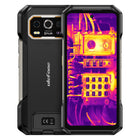
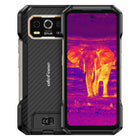
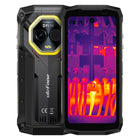
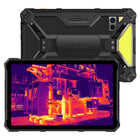
For roles in maintenance, electrical work, HVAC, or mechanical diagnostics, a built-in thermal camera can identify overheating components, insulation gaps, or leaks that are invisible to a standard camera — turning the phone into a functional diagnostic tool rather than just a communication device.
5. Bright, Sunlight-Readable Displays
Outdoor and rooftop work demands a display that stays legible in direct sunlight. Look for peak brightness specifications, not just "bright display" as a marketing phrase.
6. Reinforced Glass and Drop Protection
Corning Gorilla Glass (or equivalent reinforced glass) combined with a shock-absorbing chassis design reduces the odds that a drop cracks the screen or damages internal components.
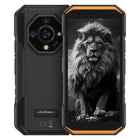
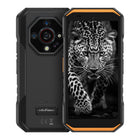
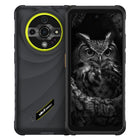
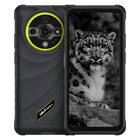
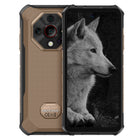
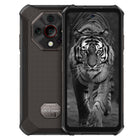
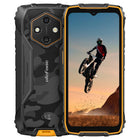
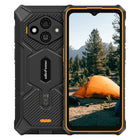
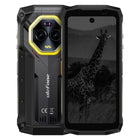
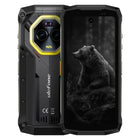
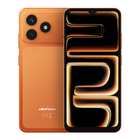
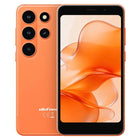
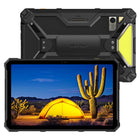
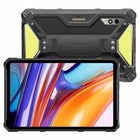
Ulefone Armor Series: Which Model Fits Your Work?
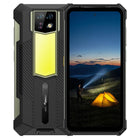
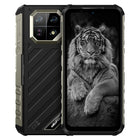
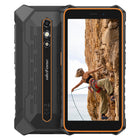
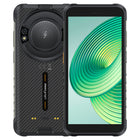
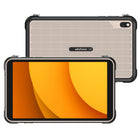
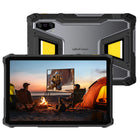
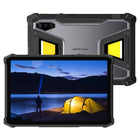
| Armor X Series | Armor 26 Ultra | Armor 28 Ultra | |
|---|---|---|---|
| Positioning | Affordable, entry-level rugged | Mid-to-high, industrial-focused | Flagship, professional-grade |
| Connectivity | 4G/5G (model-dependent) | 5G | 5G |
| Chipset | Helio-series | Dimensity 8020 5G | Dimensity 9300+ |
| RAM/Storage | 8GB+256GB (typical) | Up to 24GB (12GB+12GB virtual)/512GB | 16GB RAM/1TB ROM |
| Battery | ~6,000–10,000mAh | 15,600mAh | 10,600mAh (120W flash charging) |
| Audio | Standard | 121dB high-output speaker | Standard |
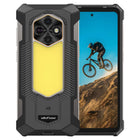
| Camera | 48–64MP main | 200MP main + 64MP Night Vision | 50MP main + 64MP Night Vision (+ optional thermal imaging) |
| Certifications | IP68/IP69K, MIL-STD-810H | IP68/IP69K, MIL-STD-810H | IP68/IP69K, MIL-STD-810H |
| Standout feature | Cost-effective fleet deployment | High-output audio for loud industrial zones; long battery endurance | Thermal imaging option; flagship-level performance |
| Best for | Budget-conscious teams, large device rollouts | Security, warehouse, cold storage, high-noise industrial floors | Mechanics, electricians, HVAC techs needing thermal diagnostics |
Which Armor model should you pick?
- Choose the Armor X Series if you're outfitting a team or fleet and need reliable durability at a lower per-unit cost.
- Choose the Armor 26 Ultra if your environment is loud (warehouses, industrial floors) or requires extended battery life across long shifts.
- Choose the Armor 28 Ultra if you need flagship-level performance plus thermal imaging for diagnostic or maintenance work — mechanics, electricians, and HVAC technicians get real functional value from the thermal camera, not just a novelty feature.
How to Choose the Right Rugged Phone for Your Job
- Identify your primary hazard. Is it drops, water, dust, or extreme temperature? Most rugged phones handle all four reasonably well, but your specific environment should guide which certifications to prioritize (IP69K for wash-down environments, for example).
- Calculate your actual shift length. A full 12-hour field day with heavy camera and GPS use needs a battery well above standard smartphone capacity — don't undersize this.
- Check glove compatibility if relevant. Not all "glove mode" implementations are equally responsive — this is worth testing or checking recent reviews for your specific model.
- Match the camera to your actual tasks. Thermal imaging is genuinely useful for maintenance and diagnostic roles — and unnecessary added cost for roles that don't need it.
- Confirm the certification, not just the claim. Look for the specific IP rating and MIL-STD-810H certification listed in the spec sheet, not just the word "rugged" in the product name.
FAQ
Q: What makes a phone a rugged phone? A: A rugged phone is built and independently tested to survive conditions that damage standard smartphones — drops onto concrete, dust and debris, water exposure, and extreme temperatures. The two benchmarks that matter are an IP68 or IP69K ingress protection rating and MIL-STD-810H certification, a U.S. military testing standard covering shock, vibration, humidity, and temperature extremes.
Q: Is a rugged phone worth it for construction or field service work? A: Yes, for anyone whose phone regularly faces drops, dust, water, or extreme temperatures on the job. The cost of a rugged phone is typically lower than the combined cost of replacing a standard phone after a job-site drop, plus the lost time and data from a device going down mid-shift.
Q: What is the difference between IP68 and IP69K? A: IP68 means a device can survive continuous submersion in water under controlled conditions. IP69K adds resistance to high-pressure, high-temperature water jets — relevant for environments with pressure washing, steam cleaning, or industrial hose-down procedures, such as food processing or heavy equipment maintenance.
Q: What is MIL-STD-810H certification? A: MIL-STD-810H is a U.S. military testing standard that evaluates a device's resistance to drops, vibration, humidity, temperature extremes, altitude, and dust. It's an independently defined benchmark, not a manufacturer's own marketing claim, which makes it a more reliable way to compare durability claims across brands.
Q: Do rugged phones work well with gloves on? A: Many rugged phones include a glove-touch mode that increases touchscreen sensitivity so the screen responds through work gloves. This is a common requirement for construction, warehouse, and cold-storage environments and is worth confirming before purchase, since not every model supports it equally well.
Q: How long does a rugged phone battery last on a full shift? A: Rugged phones built for field and industrial use typically carry batteries from 10,000mAh to over 20,000mAh, well beyond standard smartphone capacity, specifically to cover full shifts, multi-day assignments, or extended time away from a charging point without needing a power bank.
Final Thoughts
A rugged phone isn't a luxury upgrade — for anyone whose work regularly exposes a device to drops, dust, water, or extreme conditions, it's the difference between a phone that survives the job and one that becomes a recurring replacement cost. Prioritize independently tested certifications (IP68/IP69K, MIL-STD-810H) over marketing language, match battery capacity to your actual shift length, and choose camera and audio features based on what your work actually requires.
Explore Ulefone's rugged phone lineup: Rugged Phones | Armor X Series | Armor 26 Ultra | Armor 28 Ultra